Wednesday, August 16, 2017
Saturday, April 22, 2017
Easter Saturday / Earth Day
Someone once challenged me to justify Christian ecological concern using scripture. We need look no further than the first chapter of Genesis. Who are we to damage and destroy what God has deemed good?
God has woven an Easter hope into the very fabric of life itself. The biosphere, like our bodies, has an astonishing capacity to heal. And like us, an astonishing capacity to rise again to new life.
Our destruction of the natural world is a reflection of our sinful insistence on living in a Good Friday universe, where we crucify Life itself in the name of our own fear, our craven desire for power, and our boundless capacity for self-destruction.
But Christ rises from death and appears in the garden. Mary Magdalene mistakes him for the gardener, but perhaps this isn’t a mistake at all, but a reminder that the Maker of the Garden rises again in the context of creation, in the midst of the vibrant springing forth of all life season by season, year by year, epoch by epoch.
Too many Christians have mistaken scientists as the enemies of faith, but what we have failed to comprehend is that so many are the observers of the goodness of Creation, the recorders of the wonder that -- as we Christians might put it -- God began and Christ continues to redeem.
Science as a discipline has its roots in the Christian academy: the university. Part of being an Easter people is about healing the false rift between science and religion, and remembering that what God has made -- and what God is prepared to raise to new life if we will only allow -- is indeed very good.
Thursday, April 20, 2017
Easter Thursday vs. Emotional Narcissism
Do you believe?
This unnerving question haunts the Easter community of Christ. But too often, we hear it as a demand to offer intellectual assent to the implausible or, perhaps even worse, an expectation that we must feel a certain way before we can judge ourselves faithful. Both are paltry versions of belief that don’t get us very far.
What happens as the Easter glow fades and the Great Fifty Days are still before us? When the zeal of the newly converted wears thin? When the honeymoon is over?
Thomas continues to ask questions. Mary Magdalene’s witness falls on incredulous ears. The first apostles wonder what to do next and sometimes gather in fear. Even when directly confronted by the Risen Christ, Peter is bewildered and unsure.
But belief is not overruled by doubt, fear, or confusion.
As for the first apostles, so it is for us:
Believing is about choosing to remain in relationship.
It is about the hard path of learning to trust.
It is about the discipline of showing up.
Who knows how we will feel today or tomorrow?
But for God in Christ, all that is secondary.
What matters is that we choose to be an Easter people. Mary Magdalene persists in delivering her message. The apostles continue to gather, in fear or not. Peter answers the call and puts one foot in front of the other.
That is what believing is about.
Wednesday, April 19, 2017
Easter Wednesday vs. the Limits of Historicity
Tuesday, April 18, 2017
Easter Tuesday vs. the Arrogance of Caesar
Monday, April 17, 2017
Easter Monday vs. Dreams of the Dead
Tuesday, December 13, 2016
God of Shadows
A Reflection for the Quiet Days of Advent
The Bishop’s Ranch
Healdsburg, California
This is a very strange Advent. And that, I suppose, is saying something for a season that is meant to be strange. Talk of angels appearing to virgin peasants, wild men shouting at crowds in the desert, and the strange intersection of prophecy, worldly power, and divine favor have always made Advent an odd season, filled with paradoxes and contradictions.
But this one seems especially odd with a body politic turned on its head and things I grew up assuming and trusting no longer reliable. This Advent feels like someone turned out the light of enlightenment and odd shadows are thrown this way and that as one person’s rising star becomes another’s heart of darkness.
Serving a largely politically liberal community has met me with unexpected questions that I could have scarcely imagined even a year ago. What does it mean, for instance, to pray for our our new government-elect? What do we ask for? What do we pray for when it comes to the world’s fiefdoms and principalities and powers changing hands in ways we did not expect, and in ways that many of us didn’t want? What does it mean when we pray (as we do in my parish) for our new administration-elect to be granted wisdom and compassion? What do we legitimize or de-legitimize with such a prayer?
Which takes us to an even more ancient question of faith: Do we only pray for what we want or desire? Do we only praise God when we deem something that happens is good? And do we pray for things to change only when something is unfolding that we deem harmful or bad? Do we face the darkness only praying for the light? Do we ask for darkness to fall on those whom we deem benighted, and light and gracious power on those we deem enlightened?
Our fundamental bias is that we often believe that ours is the God only of daybreak, of light, of illumination. Something or someone else commands the darkness and shadow. And so we, like the ancient Greeks and some of our early Christian ancestors, imagine or at least pray as though the world is divided up spiritually and even materially into light and dark, daybreak and shadow, good and evil.
That God risked everything to emerge into our world through this dangerous, unpredictable, and astonishingly miraculous process is in itself a testimony that ours is the God of shadows, a God who knows death and the role it plays in our development and the unfolding of our universe. And ours is a God who knows daybreak in the darkness, and the shadows that come with the light.
It is only our very deep Greek and Eastern cultural and philosophical influences that often bifurcate a reality of life and death, light and shadow, death and life. But to God, all of this – including the light and the shadow – just like energy and matter, space and time — are made of the same unnamed, mysterious stuff, part of the same process, part of the inextricably intertwined pattern of Creation. It is not enough to blithely say – as we sometimes do – that without darkness there can be no light, and without daybreak there can be no shadow. It is more accurate to say that God is the God of both, and there is a deeper reality in which both are one.
And that deeper reality is one that only God knows and understands.
So God is God, too, of our odd political moment. Which I suppose is not very odd in the grand scheme of things. Jesus was conceived and born in a world of odd political moments in his own time, and the quest for power and intrigue was already as old then as the tradition of prophets and kings, of powers and principalities, of despots, of empires.
God is God, too, of our shadows. Of our failings and of our blindnesses. Of those benighted parts of our souls scurrying for cover to nurse their neuroses or those parts of us yearning for the light. God is there, too, ever at work — an understanding both comforting and unsettling, paradoxical, and yet very much made to order for Advent.
The message of the incarnation that we lift up — as the shadows are long, the days are short, and daybreak comes late — is that God is the God of all of us, divided souls and communities, of diverse and conflicted peoples, God of a world teetering ever on uncertainty. Ours is a God who meets us in death as well as in life, a God who understands both the birth of stars and the vast darkness between them, a God who sees the death of every part of us making way for the new, who knows the fullness of not only our life, but our death as organisms, the deaths even of our very thoughts, the loss of memory, the dissolution of reason itself… and all their redemption and more.
As the mystic Psalmist has written:
Darkness is not dark to you;
the night is as bright as the day;
darkness and light to you are both alike. (139:11)
An Advent practice then is to learn how to pray in the darkness, in the shadow, in the land of uncertainty and fear, in the creeping doubts and inchoate worries. For God dwells there, too, and God — always — has the last word.
Thursday, December 17, 2015
Stirring in the Darkness
Tuesday, May 12, 2015
Lessons of a Not-So-Clever Priest
After nearly thirteen years serving as a priest in The Episcopal Church, I’ve learned a few things the old-fashioned way:
1. Nobody really cares about your professional credentials or seminary education, and everybody has an opinion about how you should be doing your “job.” Live with it.
2. You can crack jokes in sermons, meetings, and cocktail parties, and be the cleverest priest they ever met. You can be the best preacher and teacher in the world and the most erudite theologian and liturgist on the corner. But what they really want to know is, “Do you love us?”
3. Don’t expect anything to really happen until: a) someone is offering decent liturgy and preaching on a regular basis; b) people’s basic pastoral care needs are being met; and c) the parish’s administrative affairs are in order and are competently managed. If you can’t accomplish this yourself, find the help to make it happen, and don’t work on anything else until you do.
4. Politics, housing, and church life are truly all local. Don’t get caught up too much in the news about the wider church or its demise. When most of the people we serve hear “church” they think first and foremost of the congregation where they are a member.
5. Never put full credence in either your harshest critics or your greatest fans. Both change their minds on a dime, and both will lead you down blind paths if you let them.
6. There’s a lot of talk about “leadership” in the Church these days. Much of it is egotistical baloney. It’s always a good idea to shut up and listen. It’s also a good idea to authentically tend to your own faith journey and prayer life. Most real leadership flows from there.
7. Be curious about the people you serve. This is not about you.
8. Knowing your limits is just as important as knowing your power and responsibilities -- perhaps even more so.
9. Never go it alone, and always check your own counsel with people you trust.
10. Be courageous enough to make mistakes and humble enough to apologize for them.
11. Bullies need the same thing you do: honesty and accountability. Cultivate both.
12. The Church generally moves slower than molasses in Vermont in January before climate change. Learn to be patient.
13. The Church is not primarily a social service agency. Nor is it a mere sacramental grocery store. Never forget that Christ is at work here, somewhere, despite the best and worst you bring to bear. For this priest, that recognition is often Gospel.
Sunday, March 01, 2015
That Not-So-Sweet Jesus
Delivered at Church of Our Saviour, Mill Valley, California on March 1st, 2015
Thursday, December 18, 2014
Vexed by the Journey
Little vexed me more as an aspiring, struggling pianist many years ago than a trusted friend — also a musician — telling me to learn to “enjoy the journey.” It’s taken me nearly twenty years to even begin to grasp what he meant, noting my temptation towards quick fixes, thinking more often about arrivals, and craving a predictable stability in daily life that is worse than unachievable. It is entirely unrealistic. Worst of all, it is just another pet idol of mine.
Which brings me, of course, to the institutional church, from which we all benefit as we sit here this morning in the beautiful confines of St. George’s Chapel at the Bishop’s Ranch, bathed in a most blessed rain slowly eroding a long drought. How on earth — building on millennia of tradition with roots in Benedictine and desert spirituality along with Roman bean-counting governance and parochial proclivities — did we get the idea that Christianity should be institutional? At the very best, I suppose, we might say we need a vessel — and we might imagine that in the naval sense of the word — to help us sustain our essential needs while we attend to the inevitable spiritual journey of the inner and relational life. But I, as a parish priest and veritable church governance junkie, encounter too often the severe limitations of institutional Christianity, and I cannot quite convince myself.
This time of year, we remember a young woman, probably barely into her teens, literally bearing Christ not in the comfort of her own home in Nazareth with supportive, familiar faces and hands tending to her, but somewhere on the road outside of Bethlehem, in the midst of strangers. According to Luke’s account, at least, as a Galilean Jew, she had entered the somewhat foreign and hostile domain of her ancestral Judea with her betrothed, knowing full well she would bear her child, begotten under most dubious circumstances, while en route. I can only imagine what my wife might have said to me, in those interminable weeks leading up to the birth of one of our children, had I told her we were going on a long journey, and we would not be home before labor. There are probably more than a few suitable Japanese expressions for husbands spouting clueless ideas!
Yet Mary, the Godbearer, almost never has any significant interaction with Jesus in the gospels unless they are somewhere other than home. There is that precious glimpse of Jesus’ teenage years while on pilgrimage to Jerusalem, where he incurs Mary’s fury for worrying her when he lingers behind in the Temple. There is that argument in a kitchen in Capernaum over a wedding party running out of wine. And there is, of course, that image of Mary with her suffering son about as far from home as they might imagine ever being: on a hill called Golgotha.
| “Madonna of the Bamboo Grove” from Four Japanese Madonnas, an online collection curated by The University of Dayton |
Our predilection to reify Mary may at times obscure her witness to what it means to be truly Christian. It is not simply a matter of sitting in comfort, as we can this time of year, and sing Veni Emmanuel, unless we mean it like an expectant mother in the midst of labor. Nor is it simply a matter of hanging out for the Second Coming in the beauty of our institutional churches, unless we expect that coming to mean not one beloved stone being left upon another. The only stability we are meant to cultivate is that radical trust in the promises of God. Institutions, comforts, and even homes come and go. They can be as fleeting as a long-practiced piece of music, the fading tones of a performance, or the echoes of applause.
The Christian life is like Mary’s, after all, uncomfortable and dusty on the road, with no room at the Inn and unexpected meetings with total strangers, and the comforts and faces of home only a wistful memory. Our idolatry of stability, of sitting comfortably on the laurels of our accomplishments and conquests, explains a great many things wrong with our civilization today and across the ages. Journeys are powerfully vulnerable moments in our lives, but also the most profoundly real as we are exposed to the elements and uncertainties of a capricious universe. And so it is there that Christ comes – sometimes to us, but more often because we carry him and give birth to him there. It is there we also vent our fury at his mystifying talk about God and something he calls a kingdom. We, too, are vexed by his wandering ways and upside-down teachings. . . and we sometimes find ourselves receiving his body after the world has had its way with him and our journey — along with his — seems to have reached an abrupt end.
I suppose my greatest struggle with music and journeys all those years ago was with the “dirty laundry” of missed notes and frustratingly difficult passages and the lonely hours trying to master an instrument, a phrase, a chord, and, above all, myself. The truth of my friend’s counsel was that there was no short-circuiting, no circumventing that process. And then my even harder learning was to value that long journey when at last I would push a piece out in front of an audience, knowing even then that it might fail or I might fall to pieces in a pile of nerves. But that, too, is the journey of the true Gospel, the true Church, and all of us when we are sometimes approaching what we might call true Christianity. No amount of institutional comfort can save us from the journey we must undertake in this pregnant time. No amount of bean counting and careful preparation can forestall or circumvent the dangerous, uncertain, and sometimes seemingly endless labor of pushing Christ out into the world.
But as vexing as that is at times, it is our calling. And we, like Mary, undertake the journey risking a radical faith in the whispers of angels and the ephemera of dreams. I still take no comfort in clichés like “the journey is the destination.” But then, who said I am to be comfortable? This late in Advent is an ironic call to discomfort (“Comfort, comfort ye my people”), because nothing new comes without upsetting the old and the known, and until we learn to leave our idols at home and carry the living God with us on the road of life, we will not know our salvation.
Sunday, December 07, 2014
Ferguson, Staten Island, and Advent
One lesson of the last few weeks I have tried to take very much to heart:
We must learn in this country how to better acknowledge our privilege.
This is not about “white guilt,” which is simply a mode of hiding our power behind a selfish facade of shame — a most insidious liberal piety!
Nor is this about mere “personal responsibility” — that hideous idol of the right that is blind to all the ways oppression is sustained systemically in our common culture.
No, this is about stepping back far enough to see how the simple accident of birth clothes us in undeserved power and rights over others.
And how by seeing, then, we might be offered a choice in the shared future we are willing to pursue alongside all of our sisters and brothers.
Friday, June 13, 2014
Prelude
Lots of voicing, many choices, and an almost endless sea of detail:
Prelude in D Major, Op. 23, No. 4
Thursday, May 15, 2014
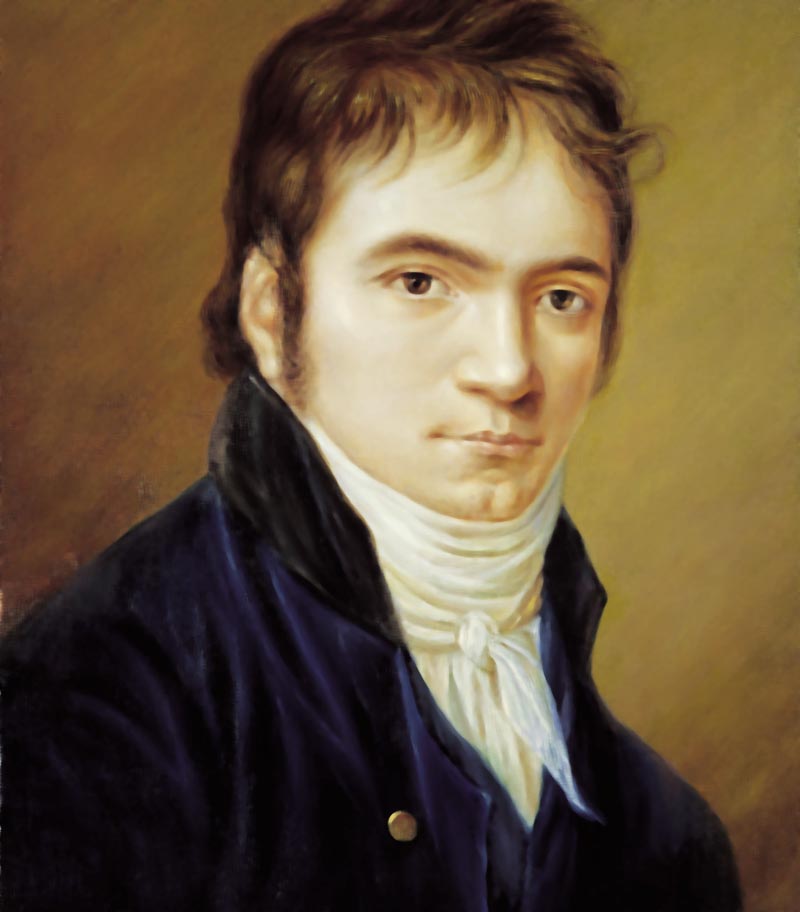
Love, Ludwig
Der Kuß (The Kiss), Op. 128 (c. 1798)
Poetry by Christian Felix Weisse (1726–1804)
Adelaide, Op. 46 (c. 1796)
Poetry by Friedrich von Matthisson (1761-1831)
Steve Beecroft, Tenor
Richard Edward Helmer, Piano
Recorded live at The Redwoods Auditorium
Mill Valley, California
May 13, 2014
Wednesday, May 14, 2014
Songs of Travel
poetry by Robert Louis Stevenson
Steve Beecroft, Tenor
Richard Edward Helmer, Piano
The Vagabond
Let Beauty Awake
The Roadside Fire
Youth and Love
In Dreams
The Infinite Shining Heavens
Whither must I Wander
Bright is the Ring of Words
I Have Trod the Upward and the Downward Slope
Recorded live at The Redwoods Auditorium
Mill Valley, California
May 13, 2014
Tuesday, May 13, 2014
To Clara from Johannes
I was given only two hands.
Definitely a study in transcriptions!
May 13th, 2014
Monday, April 21, 2014
Easter Incongruity
Friday, April 18, 2014
The Good Friday Project
Saturday, April 05, 2014
Stubborn Salvation
Sermon Notes for the Fifth Sunday in Lent, Year A
Readings
Most of us gingerly dip our toes in the waters of faith through hope. I hope there is more than this life. I hope the virtues like love and fidelity are worth it. I hope death is not the end. Hope is given as a Christian virtue, of course, but I find it somewhat remarkable that I can’t come up with a single verse in any of the gospels that Jesus commands us to hope. It’s only a word that appears in his absence or expected presence.
And so we come to another of the great “I am” statements in John this day – John’s rewriting of the familiar and ancient Torah, beginning with the creation narrative, disclosing as he did to us last week that by working in Jesus, God has not yet arrived at the seventh day sabbath rest… and this day recounting another play on the “I am” of the burning bush, the divine disclosure of being both primordial and eternal, both transcendent and imminent, both wholly other and fully present.
The focus is on the stinking tomb of Lazarus, that festering wasteland of death that haunts so many of our worst fears and wrecked dreams. John does not hesitate to ladle every possible oppositional force into the story, reminding us that Christ, the Word of God’s great “I am…” is up against every conceivable human obstacle.
On discussing making the journey to Judea, the disciples are rightly worried their teacher is walking into the inevitable, deadly trap of the religious and Roman authorities in the Jerusalem orbit. Thomas, ever the realist bordering on cynicism, offers resigning snark worthy of twenty-first century:
“Let us also go, that we may die with him.”
John must want us to feel the inevitability in this story we all feel about the finalities of this life, the surrender to forces beyond our control, the undeniable reality of our suffering and the press of death.
Mary is too grief-stricken to greet her friend and savior. Martha, the more pragmatic of the two sisters meets Jesus with a thinly veiled accusation:
“Lord, if you had been here, my brother would not have died…”
followed by a thin sliver of hope:
“But even now I know that God will give you whatever you ask of him.”
But when Jesus offers unwavering assurance that her brother will rise again, Martha retreats to an abstraction about the resurrection of the dead on the last day, somewhere off in a murky future where hope for a struggling life might find some projected justification. The present suffering of loss –a brother, breadwinner, and kin companion in life’s brief journey gone – is just too much for hope to bear.
And so it is for Jesus when he arrives at the tomb and weeps with his companions. John compels us to consider a God who does not will our suffering or plan it to test us or use it to punish us, but rather who enters into it with us. This is a dangerous God who is not manipulated by clever prayers or incantations or pleased by the bribes of priests or even by our most righteous piety. This is a God who suffers with us, sheds tears, breaks with our hearts, and feels the gnawing reality of our finitude. This is a God who knows our limited vision, the real humility of our impotence, and the uncertainties that grind away at even the most vibrant faith.
This is a God who risks all danger to be with us at the very end, in the dark and bitter deaths we all inevitable experience.
And, a bit like Ezekiel, Jesus, when confronted with the undeniably dead and dry bones of every broken dream, promise, and ended life, does not respond to the question, “Can these bones live?” with a tepid “I hope so.”
Hope is not enough, at least not as we understand it these days as a shrug in the face of all human limitation. Instead, Christ, like Ezekiel, surrenders to the sublime power of the Creator: “Oh, Lord God, you know.”
“I am the resurrection and the life,” God in Christ says to a hopeful Martha and to us in the sacraments, at our deathbed, in our suffering, and in our darkest hour of despair. So stubborn is our promised salvation, it will not yield to our tepid hope or our deepest hopelessness. So stubborn is God’s love for us, it will not be confined to platitudes or vague projections about an afterlife. So stubborn is the resurrection that Jesus embodies, we can only respond with the silence of Lazarus as we are raised from our own stinking tombs, and ordered set free by the great I AM.
Sunday, February 23, 2014
Choral Evensong
Listen now to the full service.
Albert Campbell, director
John Karl Hirten, organist
Richard Edward Helmer, BSG, officiant
The Rev. Rob Gieselmann, homilist
Musical settings by William Smith (Preces) and Thomas Morley
Expectans Expectavi by Charles Wood